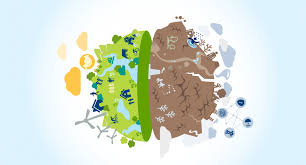
Climate change is defined as in the earth's climate is driven by human activities, mainly greenhouse gas effects the environment. There are other ways that effects the environment, like air and water pollution. We often think about human-induced climate change as something that will happen in the future, but it is happening now. Ecosystems and people in the United States and around the world are affected by the ongoing process of climate change today.Climate change affects the environment in many different ways, including rising temperatures, sea level rise, drought, flooding, and more. These events affect things that we depend upon and value, like water, energy, transportation, wildlife, agriculture, ecosystems, and human health.
Generating electricity and heat by burning fossil fuels causes a large chunk of global emissions. Most electricity is still generated by burning coal, oil, or gas, which produces carbon dioxide and nitrous oxide – powerful greenhouse gases that blanket the Earth and trap the sun’s heat.Globally, a bit more than a quarter of electricity comes from wind, solar and other renewable sources which, as opposed to fossil fuels, emit little to no greenhouse gases or pollutants into the air.Manufacturing and industry produce emissions, mostly from burning fossil fuels to produce energy for making things like cement, iron, steel, electronics, plastics, clothes, and other goods. Mining and other industrial processes also release gases, as does the construction industry. Machines used in the manufacturing process often run on coal, oil, or gas; and some materials, like plastics, are made from chemicals sourced from fossil fuels. The manufacturing industry is one of the largest contributors to greenhouse gas emissions worldwide.
Humans impact the physical environment in many ways: overpopulation, pollution, burning fossil fuels, and deforestation. Changes like these have triggered climate change, soil erosion, poor air quality, and undrinkable water. These negative impacts can affect human behavior and can prompt mass migrations or battles over clean water.Pollution is the introduction of harmful materials into the environment. These harmful materials are called pollutants. Pollutants can be natural, such as volcanic ash. They can also be created by human activity, such as trash or runoff produced by factories. Pollutants damage the quality of air, water, and land. Many things that are useful to people produce pollution. Cars spew pollutants from their exhaust pipes. Burning coal to create electricity pollutes the air. Industries and homes generate garbage and sewage that can pollute the land and water. Pesticides—chemical poisons used to kill weeds and insects—seep into waterways and harm wildlife. All living things—from one-celled microbes to blue whales—depend on Earth’s supply of air and water. When these resources are polluted, all forms of life are threatened.Pollution is a global problem. Although urban areas are usually more polluted than the countryside, pollution can spread to remote places where no people live. For example, pesticides and other chemicals have been found in the Antarctic ice sheet. In the middle of the northern Pacific Ocean, a huge collection of microscopic plastic particles forms what is known as the Great Pacific Garbage Patch.
| Name | My Dad And Mom | Birthday | Age On 2024 | skills |
|---|---|---|---|---|
| Nixon | Ryan & Kayla | 09/04/2012 | 12 | Coding |
| Kayla | Cheryl & Don | 09/20/1988 | 36 | |
| The Teacher | 18 |